Welcome to our Chapter Resources Page. This page was made to provide links to handouts, PowerPoints, and to provide follow-up materials from a few of our chapter presentations and events.
Newly added, our Chapter Resources Page also provides a guide to help teachers and parents teach students about the amazing topic of pollination.
Pollinator Narrative and Activity Guide Grades 3-8
Pollinator Education Games:
Events:
Winter Sowing Social January 29, 2026 Follow-up Resources
What better way to await spring than preparing and sowing seeds! Whether you were able to attend the winter sowing social at Bay College Greenhouse or not, the following resources will help you successfully start seeds now to assist their successful springtime germination.
Stratify those seeds! Stratify seeds in the refrigerator or use outdoor containerized planting.
But how are seeds stratified? What is the difference between dry and moist stratification? Does stratification differ for different species? Do my seeds need scarification in addition to stratification? Answers to these questions and more, provided by the experts at Prairie Nursery, takes the guess-work out of stratifying native seed. Thank you Prairie Nursery!
Seed stratification and propagation information:
https://www.prairienursery.com/resources-guides/seed-stratification
https://www.prairienursery.com/media/pdf/seed-propagation.pdf
Container planting is a method of winter planting where seeds are directly planted into containers filled with soil without stratifying the seeds first indoors. Once planted, the containers are placed outside in an area that receives winter sun, snow and rain. Directions for this planting method is provided by Penn State Extension in their “Starting Seeds in Winter” pdf. Thank you Penn State Extension for sharing this seeding method!
https://extension.psu.edu/starting-seeds-in-winter
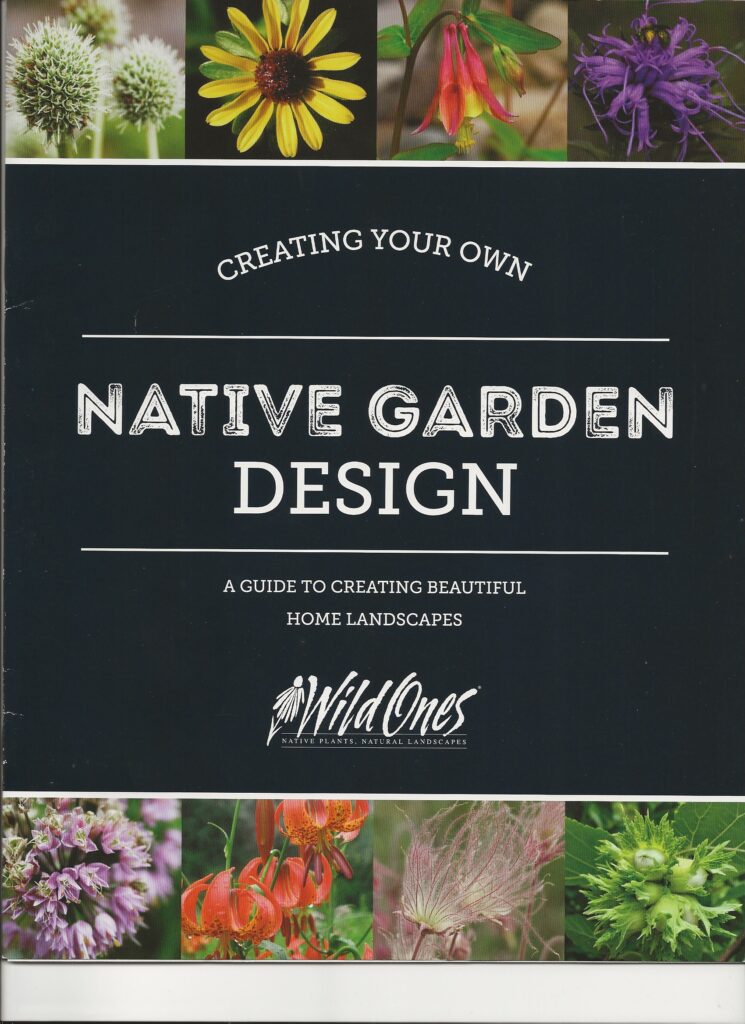
Native Garden Design –
Creating Your Own Native Garden Design, A Guide to Creating Beautiful Home Landscapes is available on-line at http://www.nativegardendesign.wildones.org
Species Checklist from Deb LeBlanc’s May 17, 2025 Spring Ephemeral Plant Walk at Pictured Rocks National Lakeshore Thank you Deb for sharing your expertise, passion, and keen eye for rare variants with the Central Upper Peninsula Chapter of the Wild Ones!
Presentations:
PowerPoint Slides from Steve Dosh’s April 17, 2025 Permaculture Presentation Thank you Steve for sharing your knowledge and slides with the Central Upper Peninsula Chapter of the Wild Ones!
Recorded Web Seminar:
Dr Brian Black’s March 2022 Web Seminar on What Is Sustainable Gardening
Learn about the importance of sustainable gardening, design and practices, in a 45 minute presentation available through Michigan State University’s website:
Native Gardening Guides:
Gardening with Native Plants: A Guide for Michigan’s Upper Peninsula by Maria Janowiak, MSU Extension Master Gardener Volunteer
This guide, developed as a volunteer project for the Michigan State University Extension Master
Gardener program in March 2020, was designed to help gardeners in Michigan’s Upper Peninsula increase their use of plants that are native to the local landscape and suitable to our area’s unique growing conditions. It is intended to provide a quick overview of the topic, with supporting links to sources for additional reading.
Important help in developing this guide was provided by Brian Black of Bay College.
Native Plants of Delta County Michigan is a compilation of flowers, shrubs, grasses, trees and vines which are native to Delta County with helpful notes on where to plant, when they bloom, height of mature plants, sun requirements, which are good choices for pollinators and more.
The plants listed in this 2017 document are ones that have been propagated by the Bay College Greenhouse from seeds collected locally by Dr. Brian Black.
Why is it important to use native plants in your plantings? “Native plants are indigenous to a particular habitat within a specific region. They are adapted to local conditions and have natural defenses to diseases and insect pests. Importantly, they provide habitat and food for butterflies, hummingbirds, songbirds, and beneficial insects. When planting, match the plants with their native conditions as much as possible. Once established, they will not require supplemental watering and those listed as upland dry and dry prairie can withstand extended periods of drought”.